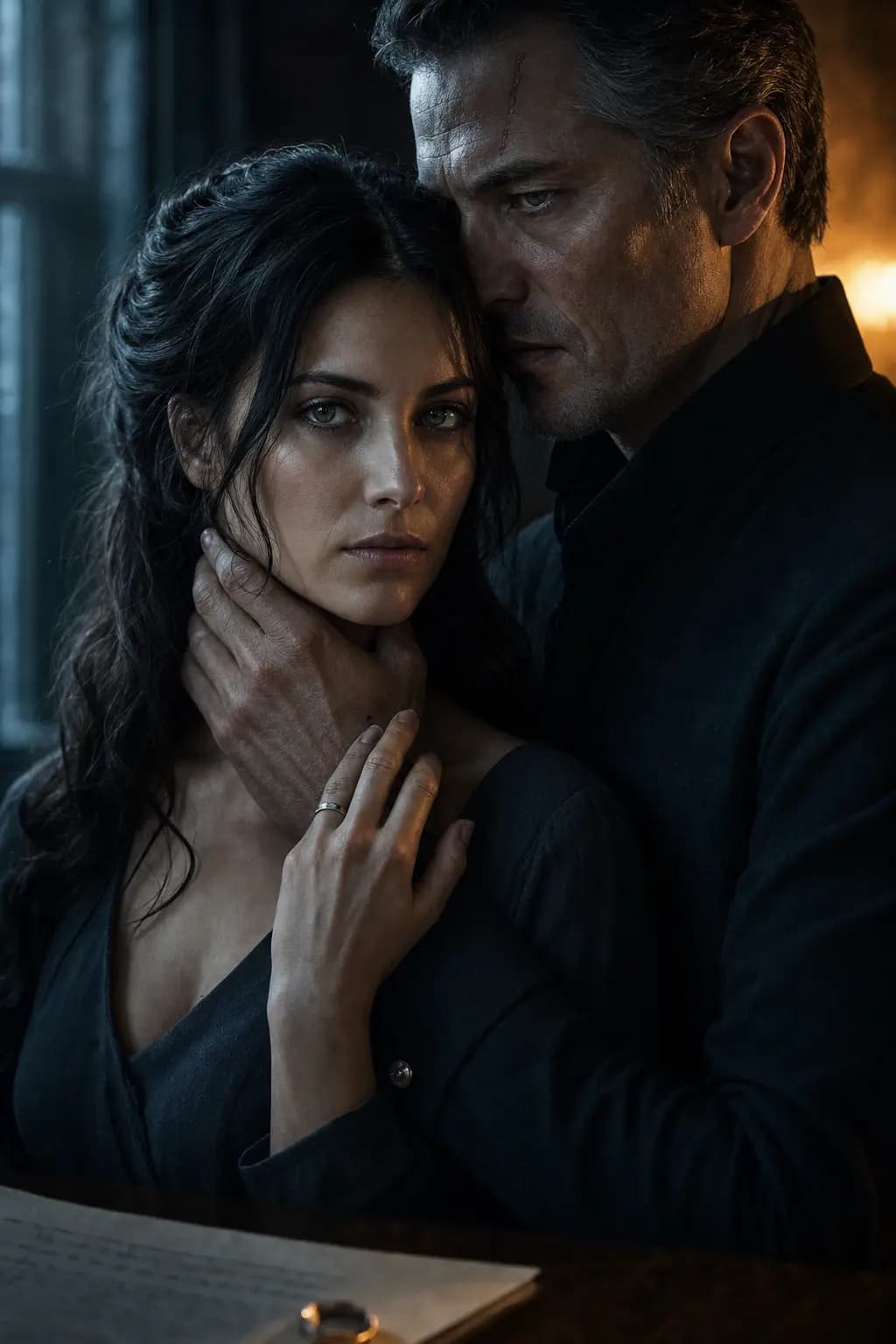
The Bride Price
1.2K likes2K reads
My fiancé sold me to settle a debt, and he kept the engagement ring.
The buyer's people were very polite about it. They are always polite, I would learn. They handed me a glass of water in the car and a folder I was not meant to read yet, and not one of them called it what it was.
Renko called it an arrangement. He said the word with his hand over mine, in front of the lawyers, like the weight of his palm was a promise instead of a price tag. Three days ago I would have believed him. Three days ago I still thought the worst thing he could do to me was leave.
He didn't leave. He walked me into a glass conference room on the fortieth floor, kissed my temple where everyone could see, and signed me away in a document that used the word settlement nine times and the word marriage twice. I sat where I was put. I had spent my whole life being put places. My mother used to arrange me like furniture for her dinners, and Renko had only ever continued the practice and called it love, and I had let him, because being arranged was the only kind of being wanted I knew.
When it was done, he slid the pen back across the table and reached for my left hand. I thought, for one stupid second, that he was going to put the ring back on. He'd taken it off the night before. He'd said it didn't fit the optics, whatever that meant, and I'd been too numb to ask.
He didn't put it back on. He squeezed my bare fingers, brought them to his mouth, and murmured, "It's just an arrangement, Dem. When this is over, we go back to how it was."
Then he let go, and a man on the other side of the room said it was time, and Renko did not look at me as I was walked out. I looked at his little finger. The ring was on it now, my ring, the one he'd told me cost more than he could afford and worth every cent. He was wearing it like a wedding band that didn't yet have a wedding.
The drive took forty minutes. The water sweated in my hand. I did not read the folder, because they'd asked me not to, and I was still the kind of woman who did what she was asked.
The house, when we reached it, was not what I'd built in the dark behind my eyes. I'd braced for a fortress, for something with gates that meant it. It was just a large pale building at the end of a long drive, expensive in the way that doesn't announce itself, the way of money that stopped needing to prove anything decades ago. There was snow on the grounds. There were lamps in the windows like anyone lived there.
Inside, there were more polite people. A woman took my coat. Someone offered me tea. I kept thinking there had been a mistake, that any minute a person with authority would frown at a clipboard and send me home.
And then he came down the stairs, and I understood there had been no mistake at all.
I had been told the buyer was dangerous. Renko had said it the way you'd warn someone about traffic, secondhand, already bored of it. I had put it down to the things people say. But the man who came down the stairs did not look dangerous the way I'd pictured. He looked like the stillest thing I had ever seen. Tall, dark hair gone iron at the temples, a face that had stopped expecting anything from the people in front of it. He moved without hurry and without sound. The room rearranged itself around him without being asked. The woman with my coat stepped back. The tea forgot itself.
"Damaris Cull," he said. He said my whole name like he'd read it on a document, which he had, flat, certain, a fact he was confirming rather than a thing he was asking.
I had a line ready. I'd built it in the car, behind the water glass, a cool thing about how I assumed the terms were in the folder and I'd appreciate clarity on the schedule. I'd handled worse rooms than this. I handled rooms.
His eyes were a pale grey-blue, nearly without color, and they went over me once, and they were not doing the thing men's eyes did. They were reading me the way I read a surface I'm about to work on. Looking for the damage. Looking for what's been painted over.
"This way," he said, and turned, certain I would follow.
My spine answered before my mind signed off on it. I took a step after him. I was furious that I had.
He led me down a corridor, and a door opened ahead of us, and a man came out carrying a box of files, and I caught the edge of something on top of the box, a photograph, a name I half-knew, before the man froze at the sight of us. And Sevran Voronin, without a word, without breaking his stride, simply moved. He stepped so that his body was between me and the box, the way you'd step in front of a window you didn't want a child to see through, and the man with the files turned and went the other way, fast, and the thing I'd nearly seen was gone.
He hadn't told me not to look. He'd just made it so I couldn't. I didn't know yet which was worse, that or Renko's careful instructions, and I'd spend a long time learning the difference.
We reached a study. There was a fire banked low. There was a desk, very plain, with a single drawer that had a lock. And on the corner of the desk was the folder from the car, the one I wasn't meant to read, sitting where someone had set it down ahead of us, waiting.
He picked it up. I braced for him to lock it away, to tell me the same thing the lawyers had, the same thing Renko had: not yet, not your concern, let the men handle it.
He held it out to me instead. I didn't take it. He set it on the desk's near edge and pushed it the last inch toward my hand.
"Read it," he said. "All of it." A beat, and the first flat thing anyone had said to me in three days that was simply, plainly true. "He didn't."
The door clicked shut behind us. Somewhere in the house a lock engaged, and somewhere it didn't.
Renko told me not to read it either.