The Soft Season
556 likes911 reads
They read the names at dawn.
Forty-seven people stood in the market square with their breath making clouds and their faces doing the thing faces do when they've heard these names before and know they'll hear them again. Prosper had the list. He always had the list. He stood on the wooden platform with his glasses fogged and his parka swallowing his frame and read each name like it weighed something.
"Daniel Oshiro."
The crowd was quiet.
"Margaux Clement."
Snow had fallen overnight. The fresh kind, soft and absurd, the kind that made the world look like it hadn't ended.
"Thea Vasquez. Liam Tran. Colette Reeves."
I held my clipboard against my chest. Not for comfort. For something to grip.
"Owen Lark."
My brother's name in Prosper's careful voice, landing on the cold air and dissolving. Three years. Three memorials. Three times I'd stood here and not cried and afterward gone to the supply shed and counted things until the math replaced whatever was trying to surface.
Prosper finished. Forty-one names. Three more than last year. He folded the paper with arthritic fingers and tucked it into his parka pocket, and I filed the number where I filed everything. Between useful and unlivable.
---
NORTHPOINT SETTLEMENT RADIO, FREQUENCY 94.3 NOVEMBER 6, MORNING BROADCAST
"Good morning, Northpoint. Temperature is twenty-four degrees, wind from the northwest at eight miles per hour. Ground frost depth confirmed at sixteen inches as of 6 AM. First frost is official. The market opens today at nine. Claudette has bread if you bring flour. The perimeter crew reports all sections holding. Welcome to the Soft Season, everyone. We've got time."
---
I went to the supply shed.
The shed was mine the way a limb is yours. I'd built the inventory system from nothing the first winter, back when Northpoint was forty people and a fence and a prayer. Now it was two hundred people and a better fence and a supply chain I could run in my sleep, which was good, because sleep was where I did most of my running.
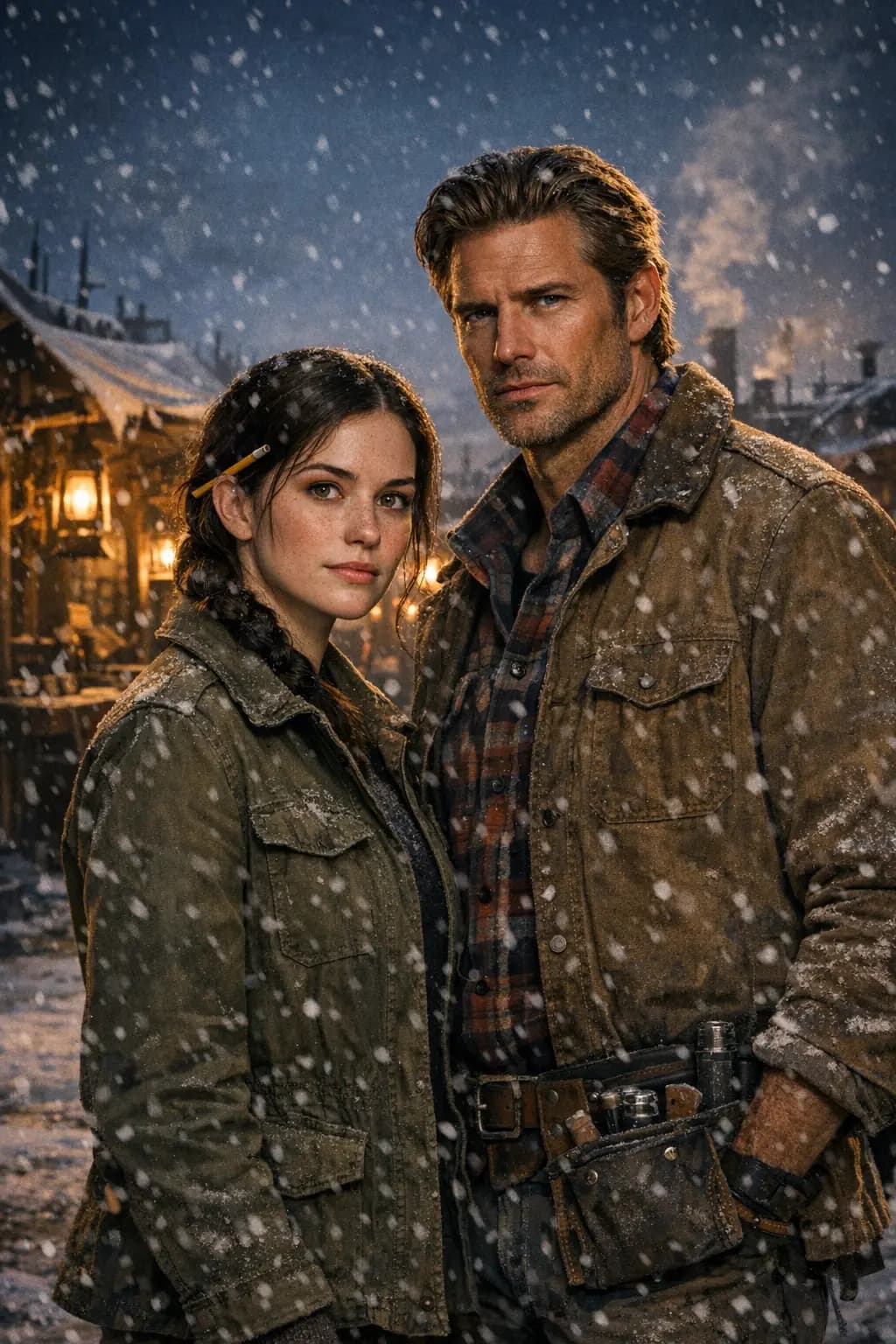
The shelves were labeled. Every can, every jar, every box of ammunition and roll of bandages had a line on my sheet. I started counting at the top left and worked my way down, pencil moving, numbers stacking, the satisfying arithmetic of survival.
Rice: forty-two bags. Condensed milk: twenty-seven cans. Honey: fourteen jars. Flour: enough for three weeks at current consumption, six if I cut the ration. Medical supplies: adequate. Ammunition: low, but ammunition was always low. Water purification tablets: two hundred and nine.
Halfway through the second shelf, the number was wrong.
One case of canned vegetables, short. I counted again. Still short. I pulled out my ledger and cross-referenced the intake logs from autumn, running my finger down columns of figures with the focus of someone defusing a bomb, because that's what a missing case was. Not a tragedy. A variable. Variables I could track, adjust, solve.
The door opened behind me. Cold air and the smell of bread.
"You're counting." Claudette filled the doorframe, a basket in the crook of her arm, flour on her cheek. She had a way of making statements sound like diagnoses. "You just heard your brother's name and you're counting canned goods."
"We're short a case of vegetables."
"Juniper."
"It was in the October intake. I have the signature. Someone moved it or it was logged wrong, and either way, the winter projection is off by two percent."
She set the basket on my desk. Inside: a round loaf, still warm. The steam rose in the cold air like a small, temporary ghost.
"Eat something," she said.
"After I finish the count."
"Eat something now." She pulled the pencil from behind my ear with the practiced gentleness of someone who'd been doing it for years. "The cans aren't going anywhere, sweetheart. They'll still be short when you get back."
I looked at the bread. At the steam. At the place on my sheet where the numbers stopped adding up.
Owen would have eaten the bread. He would have torn off a piece and shoved it in his mouth and said something about how Claudette's loaves could end wars. He would have made the shed warmer just by being in it.
I ate the bread. It was good. Flour and honey and the heat of a woodstove that someone had woken up early to feed.
"The memorial list was longer this year," I said.
"I know."
"Forty-one."
"I know the number." She touched my shoulder. "Come to the market when you're done. Prosper's doing the opening broadcast and Blythe has something she wants you to see."
She left. The shed was quiet. I picked up my pencil, found my place on the sheet, and kept counting.
Twenty-seven cans of condensed milk. Still twenty-seven. The number hadn't changed while I was eating bread, which meant the world was operating within expected parameters, which meant I could keep going.
Outside, the market was waking up. Stall doors opening. The sound of crates being stacked. Children, the ones born after, who didn't know what the Soft Season meant except that they could play outside and the adults smiled more. Their voices carried through the shed's thin walls.
I wrote the date at the top of a new page in my private notebook. November 6. Ground frost: sixteen inches. First official day.
Four months. Maybe five if the cold held. November to March, if we were lucky. If the patterns held. If the southern winds didn't come early like they did the year Owen died.
I closed the notebook. Put my pencil behind my ear. Pulled on my gloves.
Time to open the market. Time to start another winter. Time to count what we had, plan for what we'd lose, and not, under any circumstances, think about what couldn't be inventoried.
The bread was still warm in my stomach. That was a number I didn't write down.